Introduction
Microservices architecture has gained significant attention as an alternative to monolithic applications. However, it's not always the right choice.
What are Microservices?
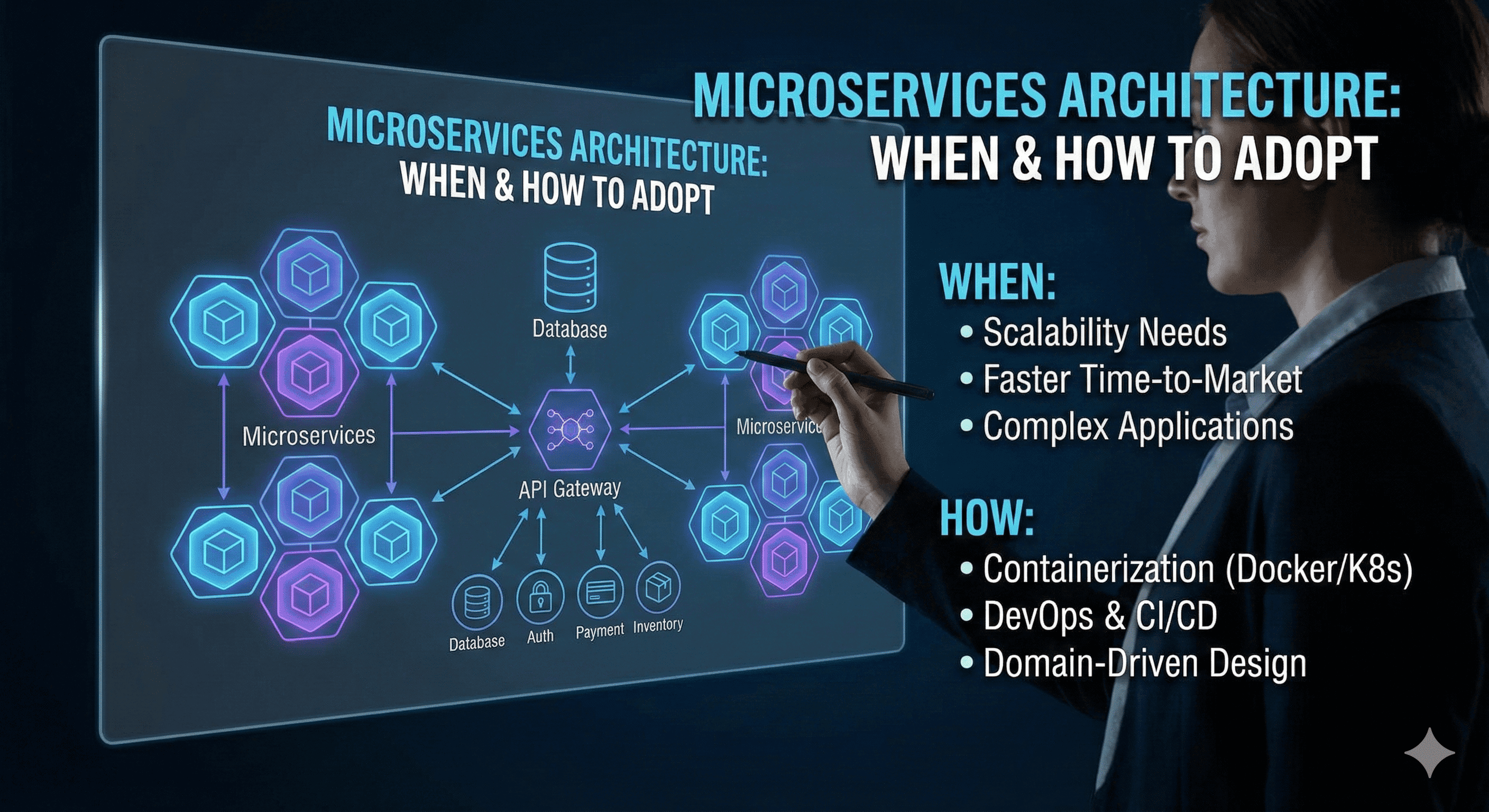
Microservices are an architectural approach where applications are built as a collection of small, independent services that communicate over well-defined APIs.
Benefits
Scalability: Scale individual services based on demand
Technology Diversity: Use different technologies for different services
Team Autonomy: Teams can work independently on different services
Fault Isolation: Failures in one service don't bring down the entire system
Challenges
Microservices introduce complexity in deployment, monitoring, and inter-service communication. They require mature DevOps practices.
When to Use Microservices
Consider microservices when: you have a large team, you need independent scaling, you have complex business domains, and you have mature DevOps capabilities.
When to Avoid
Avoid microservices if: you're a small team, you're building an MVP, you don't have DevOps expertise, or your application is simple.
Migration Strategy
Start with a monolith, identify bounded contexts, extract services gradually, and ensure proper monitoring and logging from the start.
Conclusion
Microservices are powerful but not a silver bullet. Evaluate your specific needs before adopting this architecture pattern.