Introduction
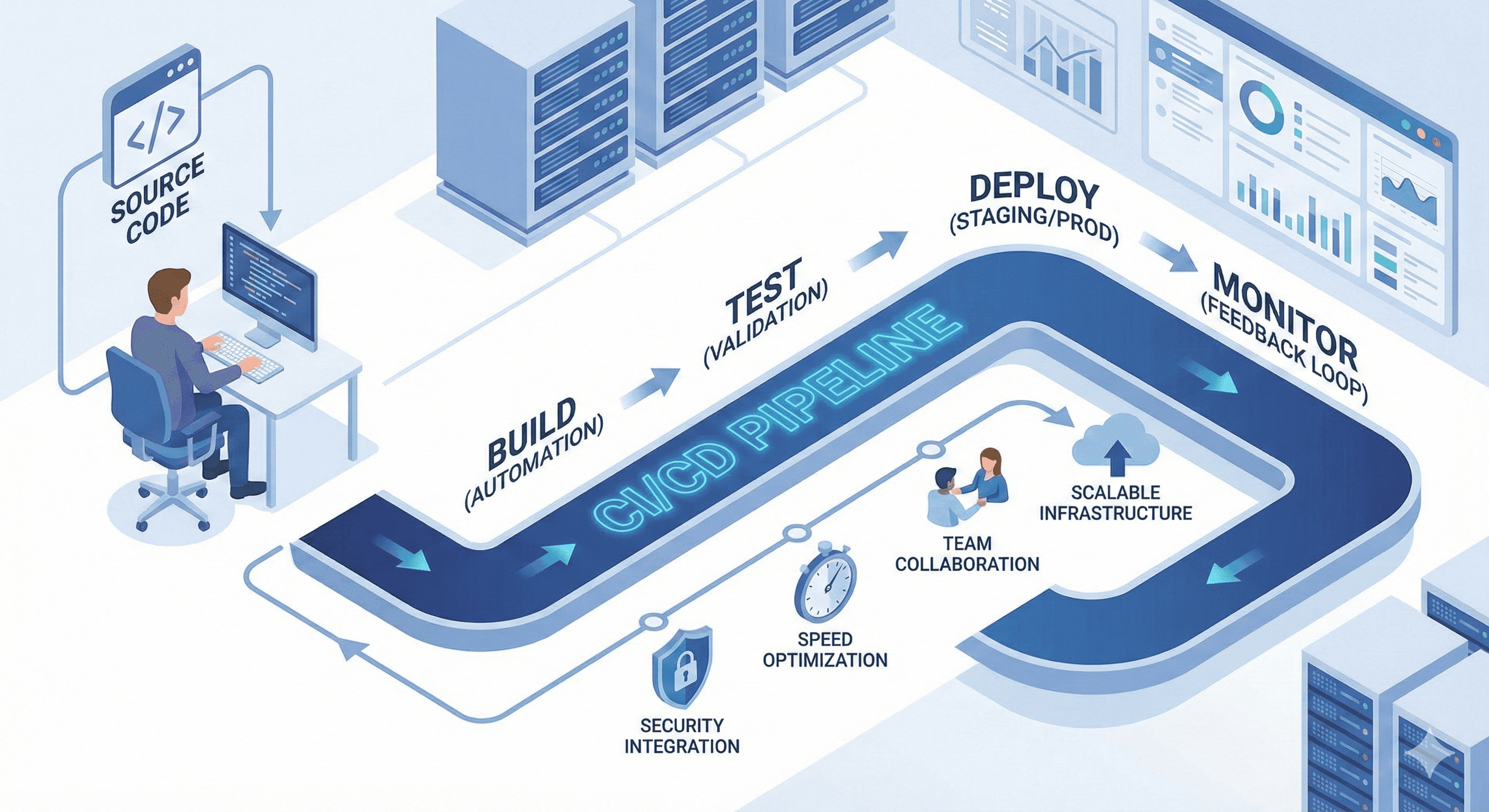
Continuous Integration and Continuous Deployment (CI/CD) pipelines are essential for modern software development. They automate testing, building, and deployment processes.
What is CI/CD?
CI/CD automates the process of integrating code changes, running tests, and deploying applications. This reduces manual errors and speeds up the development cycle.
Key Components
A typical CI/CD pipeline includes: source control, automated testing, build processes, deployment automation, and monitoring.
Best Practices
1. Start Small: Begin with basic pipelines and gradually add complexity
2. Test Early and Often: Run tests as soon as code is committed
3. Use Version Control: Keep pipeline configurations in version control
4. Implement Security: Scan for vulnerabilities in your pipeline
5. Monitor Everything: Track pipeline performance and failures
Popular Tools
Jenkins, GitLab CI, GitHub Actions, CircleCI, and Travis CI are among the most popular CI/CD tools. Each has its strengths depending on your needs.
Pipeline Stages
Typical stages include: linting, unit tests, integration tests, build, security scanning, and deployment to staging/production environments.
Conclusion
Implementing CI/CD pipelines is crucial for modern software development. Start with the basics and continuously improve your processes.